


A new year is a natural reset. It is also a great time to map out your child’s health care. A little planning now can save you stress later.
You already juggle school calendars, practices, and work deadlines. Your child’s health schedule deserves a spot on that calendar too. The good news? It is simpler than it looks.
We hope this helps families in Purchase, Harrison, Rye, White Plains and across Westchester County.
Why Getting Ahead Matters in 2027
Preventive care works best when it happens on time. Well visits can catch small concerns before they grow. Vaccines offer the most protection when given at the recommended ages.
Recent outbreaks show why timing matters. As of September 24, 2026, the CDC had confirmed 3,659 measles cases in the U.S. this year. That is well above the 2,289 cases reported in all of 2025.
Two doses of the MMR vaccine are about 97% effective against measles, according to the CDC. Staying on schedule is one of the simplest ways to protect your child.
The Well-Child Visit Schedule at a Glance
The American Academy of Pediatrics (AAP) publishes a guide called the Bright Futures Periodicity Schedule. It outlines when children should have checkups and what each one covers. Here is what that typically looks like:
- Newborn: a visit at 3 to 5 days old, then another by 1 month.
- Infancy: visits at 2, 4, 6 and 9 months.
- Toddler years: visits at 12, 15 and 18 months, then at 2 years and 30 months.
- Age 3 and up: one well-child visit each year through their teen years.
That adds up to about eight visits before 15 months. It can feel like a lot, but each one has a clear purpose.
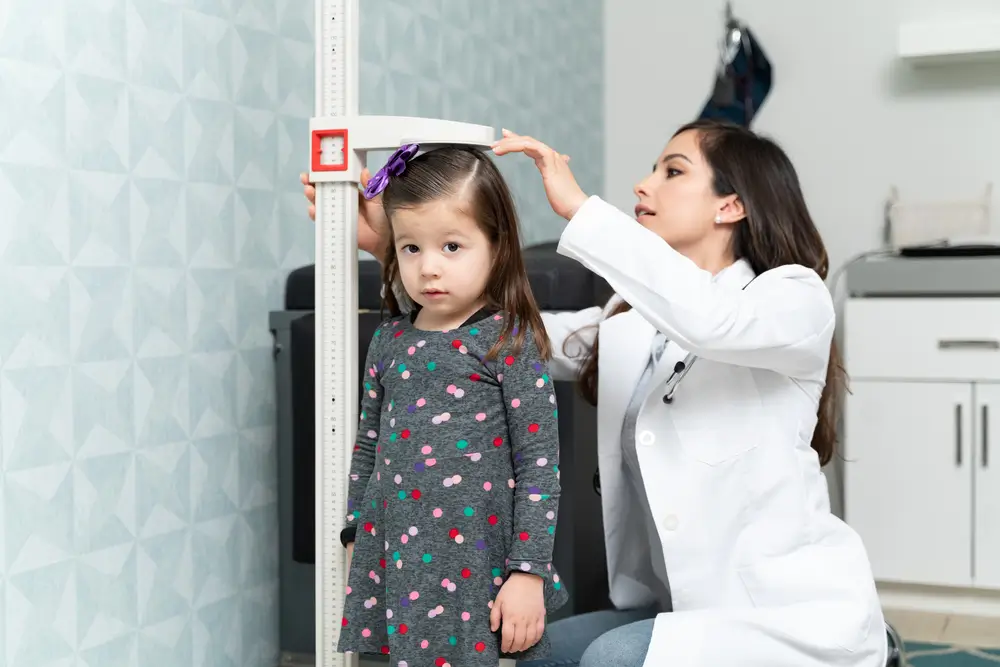
What Happens at a Well-Child Visit
Every visit is tailored to your child’s age and needs. Most include:
- Growth checks: height and weight, plus head size for babies.
- Developmental screening: a look at speech, movement, social skills and learning.
- A physical exam: heart, lungs, eyes, ears and more.
- Vaccines: any doses due at that age.
- Time for your questions: sleep, feeding, behavior, mood or anything else on your mind.
For older children, visits can also include vision and hearing checks and cholesterol screening.

Your 2027 Vaccine Checklist
You may have seen headlines about changes to federal vaccine guidance in 2026. Here in New York, the State Department of Health endorsed the AAP immunization schedule. The state also confirmed that school vaccine requirements did not change.
Exact timing depends on your child’s age and history. These are common checkpoints on the AAP schedule:
- 2, 4 and 6 months: the core infant vaccine series, given at well visits.
- 12 to 15 months: first doses of the MMR and chickenpox vaccines.
- 4 to 6 years: booster doses before kindergarten.
- 9 to 12 years: the HPV vaccine series can begin.
- 11 to 12 years: Tdap and the first meningococcal (MenACWY) dose.
- Every fall: a flu vaccine for everyone 6 months and older.
Behind on a dose? That happens more often than you might think. A catch-up plan can usually get your child back on track.
A Season-by-Season Health Calendar for 2027
Pediatric care follows a rhythm. Planning around it helps you avoid the rush.
- January to March: Winter illness season often peaks. Book spring sports physicals early.
- April to June: Spring allergies flare up in Westchester. This is a good time to request camp and school forms.
- July and August: Schedule back-to-school checkups and fall sports physicals before appointments fill up.
- September to December: Get the flu vaccine as soon as it is available. Ask about RSV protection if your baby is heading into a first winter.
Children getting a flu vaccine for the first time may need two doses, at least four weeks apart. Starting early gives them time to finish before flu season peaks.

Let’s Plan Your Child’s 2027 Together
You do not have to map out the year alone. We are happy to help. Ask us to review vaccine records and flag anything due in 2027.
New to Westchester or expecting a baby? We’re accepting new patients.
Call our office to book your child’s next well-child visit.
Medical Disclaimer: This article is for informational purposes only and does not constitute medical advice. Every child is different. Please consult your child’s physician about their specific health needs and vaccine schedule.


